A courtyard can give a home an unusual combination of openness and seclusion, creating a private outdoor space without completely disconnecting it from the surrounding environment. By positioning windows, doors, and living areas around a protected central space, architects can bring in daylight, fresh air, and views while limiting direct exposure to neighbors or busy streets. Talu it yourself reflects the broader idea that thoughtful home design can make existing spaces feel more comfortable and responsive to everyday needs. Courtyards can also strengthen the connection between indoor and outdoor areas, making rooms feel more expansive without requiring a larger footprint. Exploring this balance reveals why courtyard layouts remain compelling in contemporary residential design.
How Courtyards Establish Protected Outdoor Space
A courtyard creates privacy by placing an outdoor area within the boundaries of the home or surrounding walls. This positioning naturally limits direct views from streets, neighboring buildings, and other external spaces. At the same time, occupants can maintain clear views toward the courtyard from interior rooms. The arrangement creates an inward-facing relationship in which the home remains connected to an outdoor environment without being equally exposed to everything beyond the property. Privacy therefore comes from orientation and enclosure rather than complete isolation.
Why Natural Light Remains Important
One challenge of highly private homes is maintaining sufficient natural light without creating excessive exposure. Courtyards can address this by providing an open section of sky directly within the protected portion of the property. Windows and glazed openings facing the courtyard can bring daylight deep into surrounding rooms while avoiding direct views toward public spaces. This allows interiors to remain bright and visually connected to the outdoors even when exterior-facing openings are more limited. The courtyard effectively becomes an internal source of light and openness.
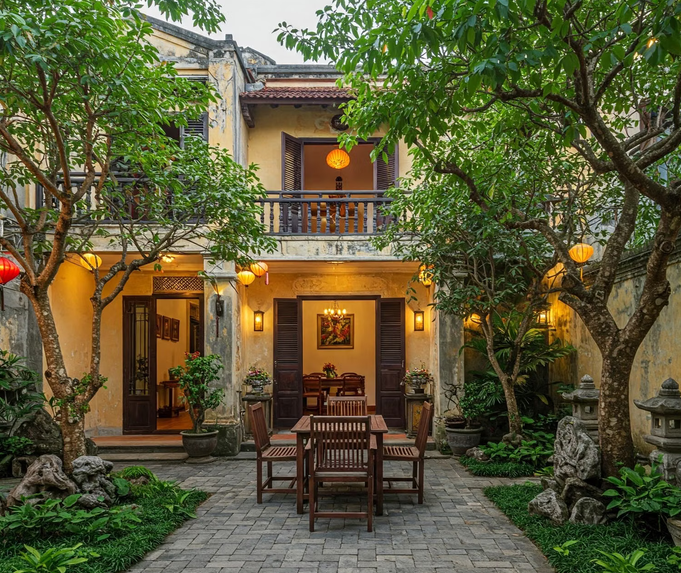
How Views Can Be Controlled Through Orientation
The direction of views is an important part of how courtyards create privacy. Instead of orienting every major window toward neighboring properties or streets, rooms can face inward toward the courtyard. This allows occupants to enjoy outdoor views without constantly seeing external activity. The courtyard can also establish a consistent visual focus throughout several rooms, creating connections between interior spaces while limiting unwanted sightlines. This makes privacy a consequence of the home’s orientation rather than simply the thickness or height of its walls.
Courtyards and the Flow Between Indoor and Outdoor Areas
A courtyard can soften the boundary between interior and exterior spaces by creating a transition zone. Large openings, sliding doors, covered walkways, and adjacent living areas can allow occupants to move naturally between the home and the courtyard. Because the outdoor space remains enclosed within the overall layout, it can feel like an extension of the interior rather than a completely separate garden. This relationship provides openness while maintaining a level of protection from the surrounding environment.
Courtyards create privacy without making homes feel closed in by combining enclosure with natural light, controlled views, and direct outdoor connections. Instead of separating occupants from their surroundings, they redirect attention toward a protected internal environment. This allows rooms to remain visually and physically connected to nature while reducing exposure to public spaces and neighboring properties. The courtyard therefore provides an architectural balance between openness and protection, showing how thoughtful spatial organization can create privacy without sacrificing the sense of living in a bright and connected home.…
